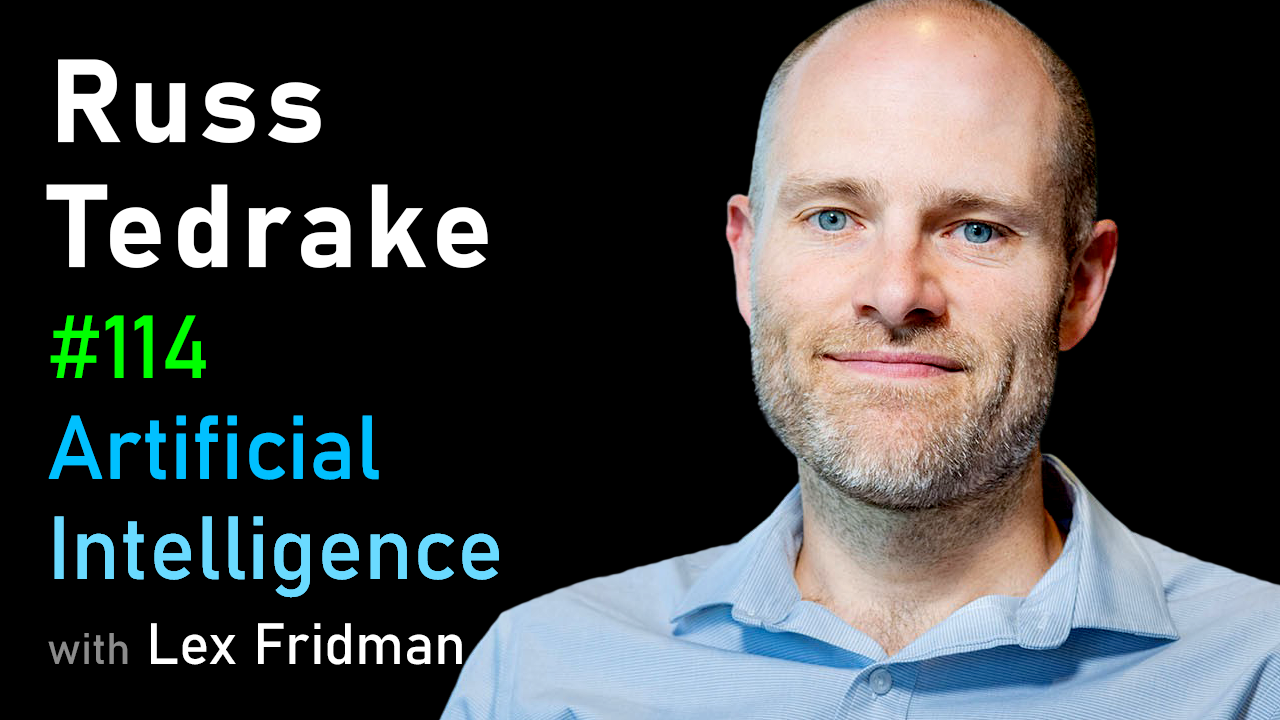
在本期访谈中,MIT教授、Toyota Research Institute机器人副总裁Russ Tedrake与Lex Fridman深入探讨了机器人学的多个核心议题。Tedrake分享了他从DARPA机器人挑战赛中获得的宝贵经验,强调了在深度学习盛行的当下,保持严谨数学思维和清晰思考的重要性。他详细阐述了机器人接触力学的复杂性,展望了未来机器人与人类社会深度融合的图景,并表达了作为技术乐观主义者的立场。
"The clarity of thought that some of the more mathematical control theory can bring to even very complex, messy looking problems is really... It really had a big impact on me." —— 一些更数学化的控制理论能够为看似非常复杂、混乱的问题带来的思维清晰度……这对我影响真的很大。
"I just think deep learning makes it so easy to do some things that our next generation are not immediately rewarded for going through some of the more rigorous approaches, and then I wonder where that takes us." —— 我只是觉得深度学习让一些事情变得太容易了,以至于我们的下一代不会立即因采用更严谨的方法而获得回报,然后我想知道这会把我们带向何方。
"I want another Newton to come along because I think there's more to do in terms of coming up with the simple models for more complicated tasks." —— 我希望再出现一个牛顿,因为我认为在为更复杂的任务提出简单模型方面还有更多工作可做。
"We mostly in robotics are afraid of contact on the rest of our body, which is crazy. There's this whole field of collision-free motion planning. And we write very complex algorithms so that the robot can dance around and make sure it doesn't touch the world." —— 在机器人领域,我们大多害怕身体其他部位的接触,这很疯狂。有一个完整的无碰撞运动规划领域。我们编写非常复杂的算法,让机器人跳舞般移动,确保它不接触世界。
"I don't think robots are going to come after me with a kitchen knife or a pellet gun right away... I would consider myself a technological optimist, I guess, in the sense that I think we should continue to create and evolve and our world will change." —— 我不认为机器人会马上拿着厨刀或弹丸枪来追我……我想我算是一个技术乐观主义者,因为我认为我们应该继续创造和进化,我们的世界会改变。